SpongeBoost partner presents wetland restoration practices at the ESP Conference 2026
SpongeBoost partner Lenka Zaňková (UJEP) participated in the Ecosystem Services Partnership (ESP) Conference that took place in Prague, Czechia, from 18 to 22 May. Her presentation titled "Restoring Wetlands as Sponge Landscapes: Stakeholder Perceptions of Ecosystem Services and Innovative Financing Across Europe" focused on how wetland restoration can strengthen landscape sponge functions and what benefits, barriers, and financing opportunities are perceived by stakeholders involved in restoration activities.
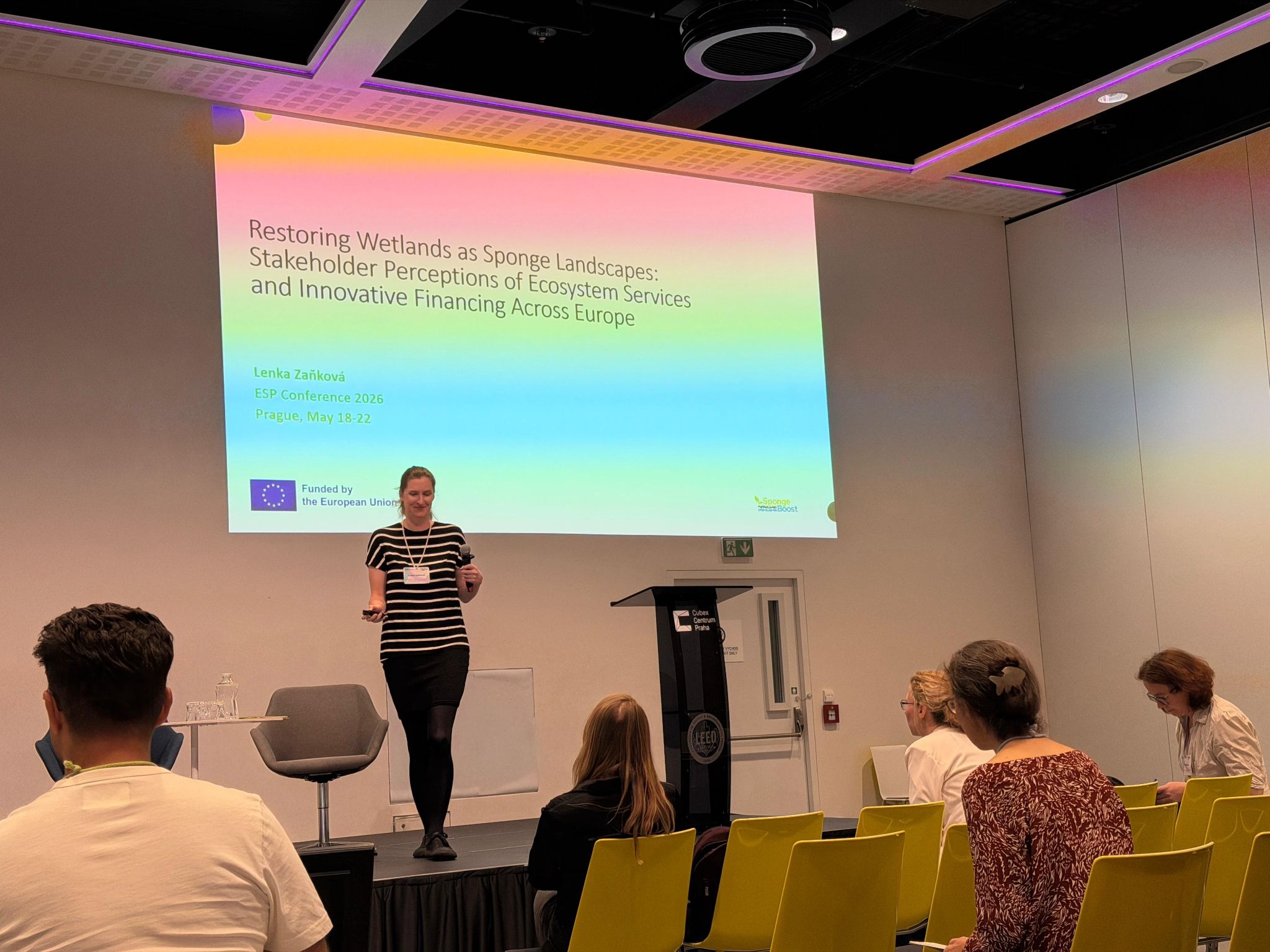
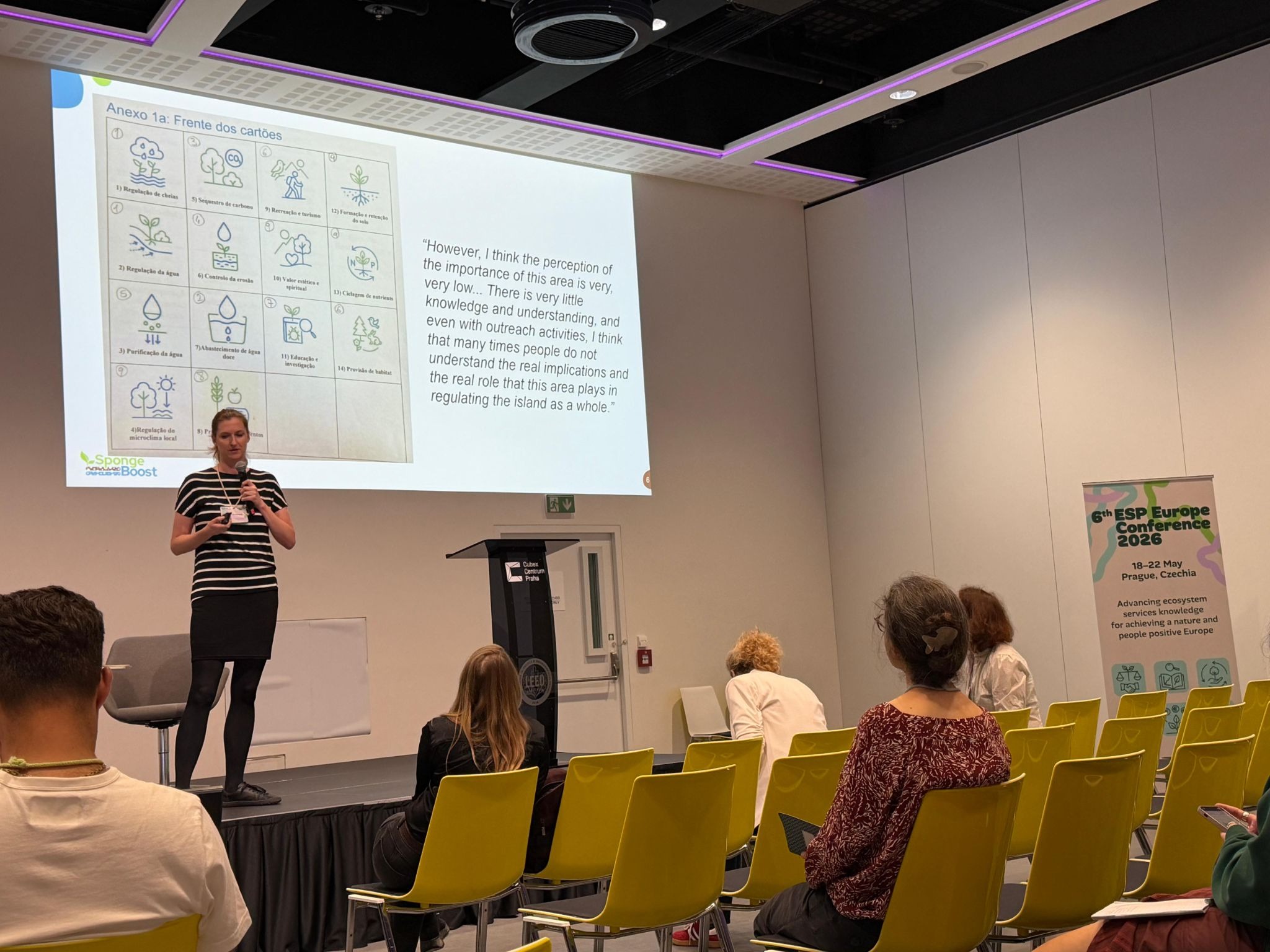
Lenka Zaňková (UJEP) presenting during ESP Europe 2026, Photo credit: Lenka Dubova (UJEP)
Lenka introduced the preliminary results from SpongeBoost’s case study areas in Spain and the Azores, based on semi-structured interviews with stakeholders involved in or affected by wetland restoration. The findings revealed that stakeholders most strongly emphasise hydrological and ecological benefits, especially water regulation, flood mitigation, biodiversity protection, and climate-related functions. At the same time, some ecosystem services remain less visible and therefore require stronger communication and awareness raising.
Lenka Zaňková (UJEP) presenting during ESP Europe 2026, Photo credit: Lenka Dubova (UJEP)
Lenka also highlighted several factors that support the successful implementation of the restoration strategies, such as the use of existing knowledge, international experience, long-term commitment, and collaboration between organisations. Key barriers included land-use conflicts, limited monitoring data, low public awareness, complex regulations, and fragmented institutional coordination.
A notable takeaway from the presentation was that while innovative financing tools such as voluntary agreements, payments for ecosystem services, biodiversity or carbon offsets, and flood risk pooling schemes are recognised, they are still rarely implemented in practice.
The Conference provided a valuable opportunity to showcase SpongeBoost’s results and discuss how better governance, stakeholder engagement, and long-term financing could support the upscaling of sponge measures across Europe.